

21 fASCINATING FACTS YOU SHOULD KNOW ABOUT THE SERENGETI BEFORE YOU VISIT

Cheetahs are just one of the many animals you will see in the Serengeti National Park / Image: @muffujohar786
The Serengeti: it's Tanzania's most recognized national park that everyone wants to visit. From being the setting for one of the world's largest animal migrations to being the home of the legendary Masaai tribe, it's easy to understand why most people include a stop here on their trip to Tanzania.
But how well do you really know the Serengeti? Whether you're planning a safari with us or a visit to Tanzania's tribes, here are some awesome facts you need to know about Serengeti National Park.

AFRICAN LION SAFARI
Discover An African Safari With A Unique Perspective. Bridging Lion Conservation With Adventure Travel. Join us on our adventure!
TABLE OF CONTENTS
The Serengeti Is Located in North-Central Tanzania, Bordering Kenya
Around Two Million Animals Pass through the Serengeti Every Year
The Meaning of the Word 'Serengeti' Is ‘Open Endless Plains'
The Maasai Are One of the Local Tribes That Live in the Serengeti
The Serengeti Migration Was Listed as One of Africa’s Seven Natural Wonders in 2013
Kopjes Are One of the Key Natural Features of the Serengeti National Park
The Greater Serengeti Eco System Is More than Just the Serengeti National Park
There Was a Time When Animal Numbers in the Serengeti Fell to Critical Levels
The Serengeti Is One of the Best Places in the World to See Predators
One of the Largest Lion Populations in the World Lives in the Serengeti
The Serengeti Was Once Under Consideration for a Highway Development
Unlike Some National Parks in Tanzania, Night Safaris Are Banned in the Serengeti
Even in 2026, Poachers Still Pose a Risk to the Serengeti National Park
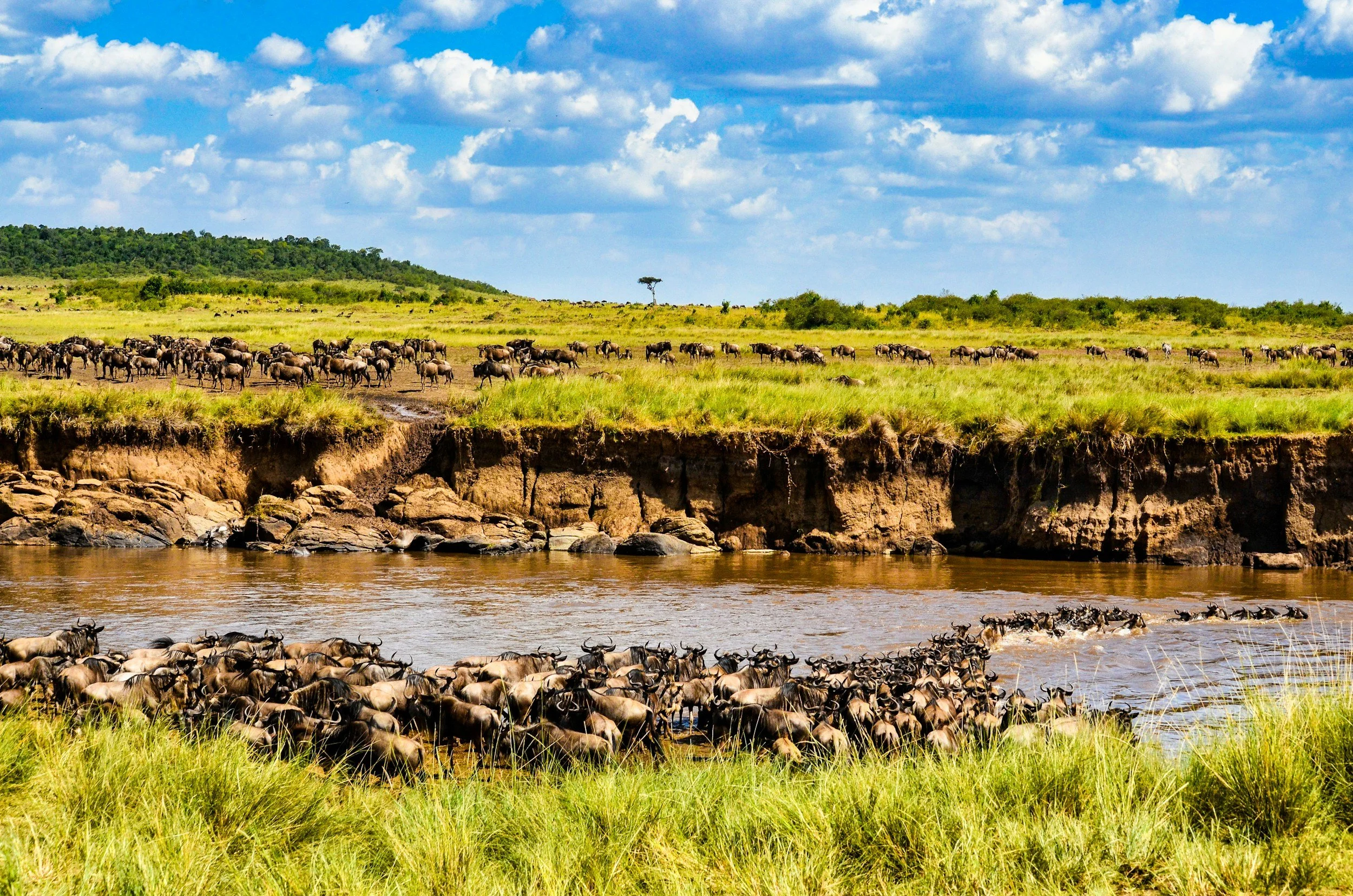
A confusion of Wildebeest crossing the river during the Great Migration in the Serengeti National Park / Image: @perventuator
1. The Serengeti Is Located in North-Central Tanzania, Bordering Kenya
Before we get into our 21 fascinating facts about the national park, you'll need to know where the Serengeti Plains are. The park is situated in north-central Tanzania, right on the border with Kenya, spanning a whopping 30,000 square kilometers.
If you're heading to the Serengeti, your journey will likely begin in the city of Arusha, which is about 6-7 hours (419 km) from the park. Arusha is conveniently connected to Kilimanjaro International Airport, which offers numerous international flight routes, making it easy to fly in and start your adventure from there. Most luxury lodges in the Serengeti will offer you a transfer from the airport upon request, or if you would like to go one step further, you could book a private charter to take you right into the heart of the park.
2. The Great Migration Begins in the Serengeti
If you're thinking of visiting the Serengeti, you've probably heard of the Great Migration. This remarkable 800 km journey begins in the southern Serengeti, where millions of wildebeest embark on their trek north, eventually crossing into Kenya’s Maasai Mara. Their long journey is driven by the need to follow the rains so the animals can find land to graze on along the way on their lengthy trek.

Hippos assemble in a Serengeti lake. Hippos are a common sighting in the Serengeti National Park / Image: @perventuator
3. Around Two Million Animals Pass through the Serengeti Every Year
It's difficult to pinpoint the exact number of animals moving through the Serengeti game park during the Great Migration, but estimates suggest that the figures are at around two million. This figure includes roughly one million wildebeest, 500,000 Thomson's and Grant's gazelles, 200,000 zebras, 4,000 lions, 5,000 to 6,000 cheetahs, and about 7,500 hyenas. And that's before you consider all the other species that roam the park for the entire year.
4. The Serengeti Is a Unesco World Heritage Site
In 1981, the Serengeti National Park in Tanzania was declared a Unesco World Heritage Site; it was recognized under Criterion (vii) for being the place where the largest natural animal migration passes through, including millions of species such as wildebeest and zebras. On top of that, UNESCO recognized the park under Criterion (x) for its rich and diverse ecosystem.

Stunning endless plains of the Serengeti. Zebra and wildebeest rest during the Great Migration at sunset / Image: @perventuator
5. Tourists Visiting the Serengeti Must Pay Entrance Fees
As a visitor, you'll have to pay entrance fees to the Serengeti National Park. This payment goes towards enhancing the experience for visitors and conversation efforts, so you know your money is going towards a good cause.
At the time of writing this article, these are the fees for anyone wanting to visit the Serengeti in Tanzania:
Peak season:
Adult - TZS 190742.24 ($70)
Child (5 to 15) - TZS 54497.78 ($20)
All children under the age of 5 - free
Expats/residents - TZS 95371.12 ($35)
Expat child (5 to 15) - TZS 27248.89 ($10)
EA or Tanzanian citizens - TZS 10,000 ($3.67)
EA or Tanzanian citizen child - TZS 2000 ($0.73)
Low season:
Adult - TZS 163493.35 ($60)
Child (5 to 15) - TZS 54497.78 ($20)
All children under the age of 5 - free
Expats/residents - TZS 95371.12 ($35)
Expat child (5 to 15) - TZS 27248.89 ($10)
EA or Tanzanian citizens - TZS 10,000 ($3.67)
EA or Tanzanian citizen child - TZS 2000 ($0.73)
6. The Meaning of the Word 'Serengeti' Is ‘Open Endless Plains'
By definition, the meaning of the word Serengeti translates to 'open endless plains.' Serengeti is actually a word used by the Masaai people. It comes from the word 'Siringet,' which means 'the place where the land runs forever,' which is very fitting for a national park that covers 30,000 square kilometers.

One of the facts about the Serengeti is that the word ‘Serengeti’ means ‘open endless plains’ and within this image, you can see why / Image: @mariolagr
7. The Serengeti Is a Prime Location for Luxury Safaris
Compared to some of Tanzania's other national parks, the Serengeti is seen as the preferred option among luxury travelers heading off on a safari. With nearly 12 airstrips for private jets to fly into, a wealth of high-end lodges and camps, and premium tour agencies offering exclusive excursions like BornWild, if you enjoy extraordinary experiences, the Serengeti will be the perfect choice for you.
Planning a luxury safari on your own can be tiresome, as there are varying options out there. Luckily, we've made a short guide ourselves to guide you through the booking stages; read our helpful article: A Short Guide To Booking A Luxury Serengeti Safari
CELEBRATE A SPECIAL MILESTONE SAFARI ADVENTURE WITH US
Mark life’s most meaningful moments with a tailor-made safari experience designed just for you.
8. You Can Spot the Big 5 in the Serengeti National Park
Spotting the Big 5 is a must for many travelers, and you'll be able to see all of them in the Serengeti National Park, including lions, elephants, rhinos, buffalos, and leopards. There are quite a few of each of the Big 5 species scattered generously throughout the Serengeti. Although rhinos can be a bit trickier to find, it's not impossible. If you have a good guide, they will navigate the way to give you the best chance of observing them.

Spotting the Big 5 is readily available to see within the Serengeti National Park all year round. Here is an elephant sauntering through the plains in the dry season / Image: @ranakatan
9. The Maasai Are One of the Local Tribes That Live in the Serengeti
Many local tribes, including the Maasai people, live throughout the Serengeti. The Maasai tribe is arguably the most famous tribe associated with Tanzania. Some of their people live on the Kenyan side of the border, while others reside on the Tanzanian side. However, due to legislation, their movements have been more limited in recent times on the Tanzanian side.
But what makes the Maasai so special? They're a tribe that has deep traditions which come from the northwest of Kenya and South Sudan. You can easily identify them through their red clothing and the unique ornate jewelry that they wear. One other interesting fact about the Maasai is how important cattle are to their society; cattle are seen as a sign of wealth in the community, and they're often traded as a source of revenue.
In contrast to other tribes in Tanzania, the Maasai people are quite open and easily contactable for tourists with a certified guide. We can help you arrange visits to some of the Maasai settlements as an add-on to your safari package.

Four members of the famous Maasai tribe, sporting their legendary red checked garments and ornate jewelry / Image: @elliotparis
10. More Than 500 Bird Species Call the Serengeti Home
Not only is the Serengeti an excellent place for some animal spotting, but it's also a key location for birdwatchers. The park is home to around 500 bird species in total. Of course, you'll find some of the well-known names like Kori Bustards, but there's also a chance you will be able to catch a glimpse of the incredible lilac-breasted rollers if you’re fortunate.
Unlike wildlife safaris, much of the birdwatching outings take place in the central region of the Serengeti national park due to its proximity to the River Seronera, where a lot of the water bird species reside.
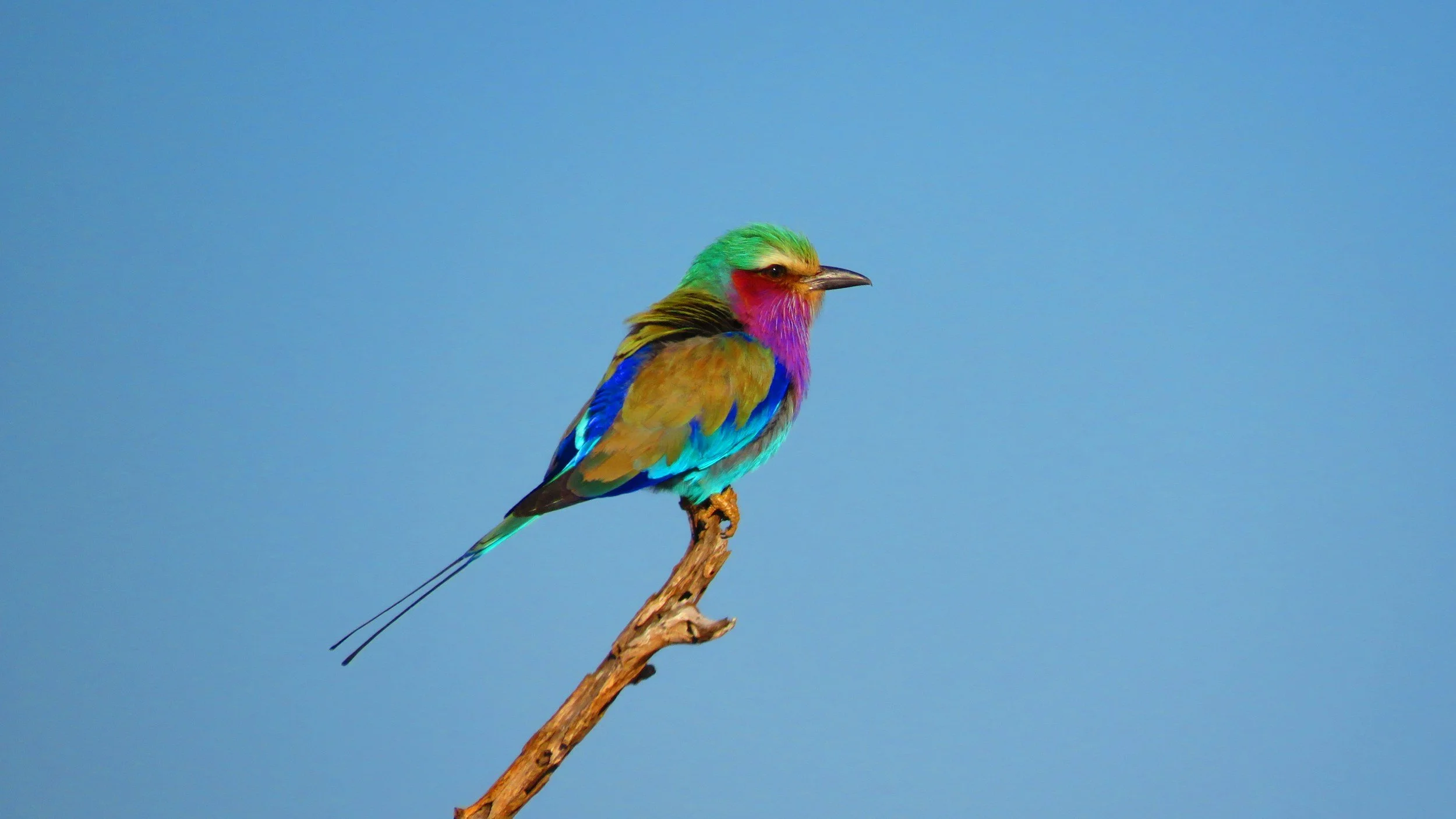
One of the unspoken facts about the Serengeti is that there are over 500 bird species that live within the park. Here is a beautiful lilac-breasted roller / Image: @markattree
11. The Serengeti Migration was Listed as One of Africa’s Seven Natural Wonders in 2013
Back in 2013, the Serengeti Migration was given status as one of Africa's seven natural wonders alongside Mount Kilimanjaro, the River Nile, the Sahara Desert, Ngorongoro Crater, the Okavango Delta, and the Red Sea Reef.
12. Kopjes Are One of the Key Natural Features of the Serengeti National Park
When you're out on a game drive throughout the Serengeti plains of Tanzania, one of the main features you'll notice is the Kopjes. These natural landforms are granite islands that date back millions of years ago when volcanic bubbles made their way up to the earth's surface and firmed up over time. However, due to the high rainfall that the Serengeti experiences yearly, the Kopjes have been eroding at a rapid pace, although some of them are still very robust in appearance.
Lions, in particular, use the Kopjes across the Serengeti as a resting place to hide away and scout out their prey until they find a suitable time to pounce. Many game drives will include a stop at some of them to see if you can catch the big cats in action.

A lioness sits on top of a Kopje rock with the lands of the Serengeti in her gaze / Image: @denisi_z
13. The Greater Serengeti Eco System Is More than Just the Serengeti National Park
Unknown to many, the greater Serengeti ecosystem is far more than the Serengeti National Park, although that is a large chunk of it. Many other sites, such as Maswa Game Reserve, Loliondo, Ngorongoro Conservation Area, Ikorongo Game Controlled Areas, and Grumeti, are part of the Serengeti. Additionally, some places in Kenya are also included, such as the Masai Mara Game Reserve.
14. The Serengeti Is Among Africa’s Oldest National Parks
After European explorers discovered the Serengeti between the late 1890s and the early 1900s, it was eventually recognized as an official national park in 1951, making it one of the oldest on the planet.
Little known to many, when it was first established, the Ngorongoro Conservation Area was also part of the national park. However, this eventually changed in 1959, when the NCA was removed from Serengeti National Park and became its own conservation area.
4-DAY SERENGETI ADVENTURE
Showcasing the best of the Serengeti, step inside our adventure and discover how it unfolds right before your very eyes….
15. There Was a Time When Animal Numbers in the Serengeti Fell to Critical Levels
While the Serengeti’s animal populations are flourishing today, they suffered catastrophic declines in the late 19th and early 20th centuries due to a rinderpest epidemic—a viral cattle plague that devastated wildlife, particularly wildebeest. Prolonged droughts further worsened the situation. Following the successful control and eventual eradication of rinderpest in the 1950s and 1960s, the ecosystem began to recover, and by the 1970s the wildebeest population had rebounded close to its former numbers.
16. The Serengeti Is One of the Best Places in the World to See Predators
If you're interested in seeing predators in action, you'll be happy to know that the Serengeti is one of the best places in the world to witness them. This area is home to a list of carnivorous animals, including cheetahs, lions, hyenas, leopards, wild dogs, and jackals. These often have their eyes on vulnerable herbivores that are part of the Great Migration, such as wildebeasts, gazelles, and zebras.
Although the loss of life is unfortunate in any circumstance, predators must hunt these animals in order for the ecosystem to function properly. This is for a variety of reasons, including to control the size of the population. If there are too many animals and not enough grass and water to feed on, there won't be enough resources for them all to survive.
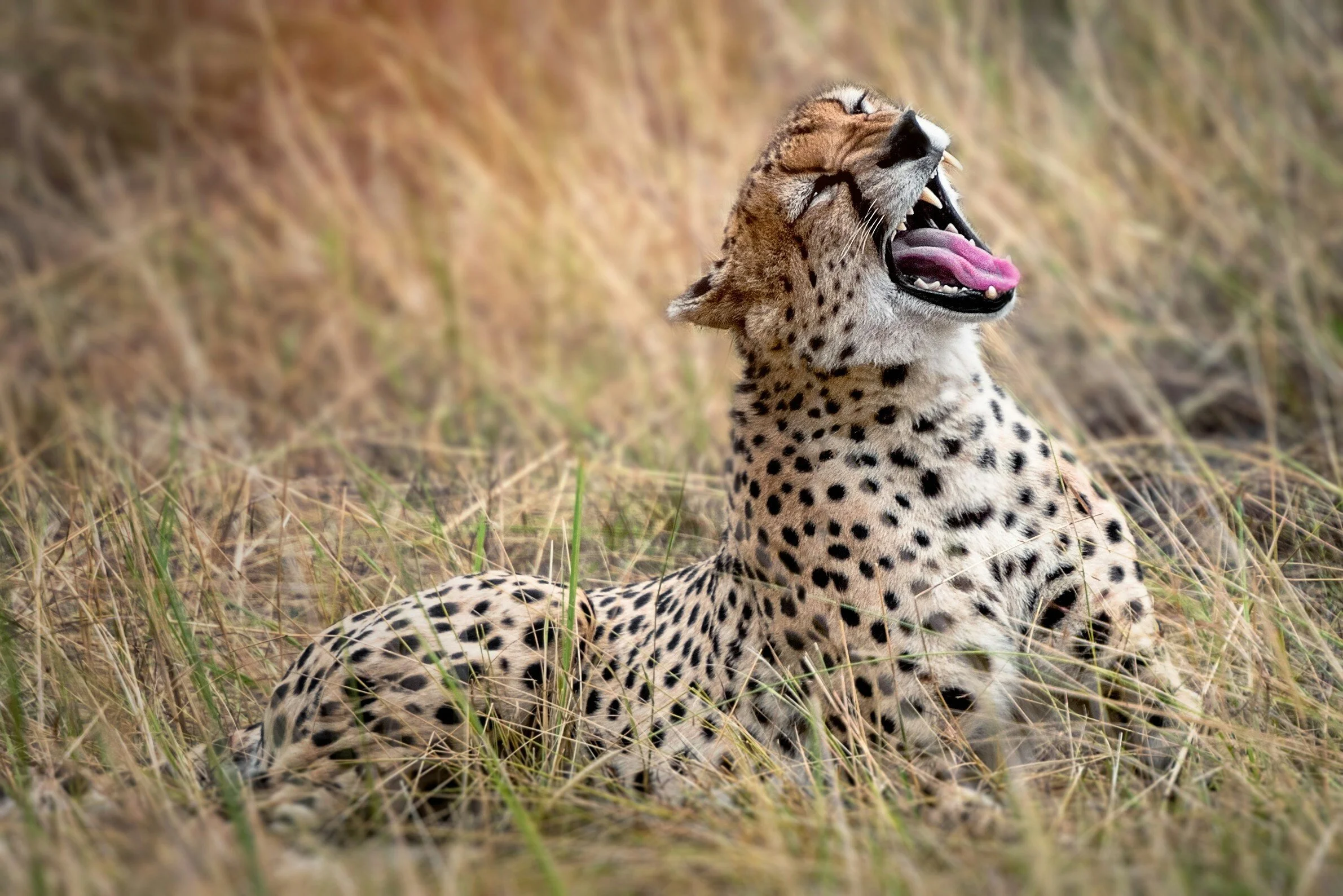
A sitting cheetah yawning in the grasses of the Serengeti. The Serengeti is one of the best places in the world to see predators / Image: Hu Chen
17. One of the Largest Lion Populations in the World Lives in the Serengeti
Out of all the lion populations in the world, the Serengeti is known for having one of the biggest. Estimates today suggest the number is roughly 3,000, which is quite sizable for one area. That said, competition from other predators and the kinds of prey available largely determine the number found in the park at one time.
The central areas of the Serengeti, in particular, are hugely popular for African lion safaris, given the high probability of spotting them. Just imagine witnessing the prides traverse the rugged savannah in search of food. It's an experience every person should have at least once when they come to Tanzania.
18. The Serengeti Was Once Under Consideration for a Highway Development
Did you know that in 2010, the Tanzanian government released plans to build a highway through the Serengeti? This project was expected to go ahead until there was a huge backlash among the population, as well as other notable rights groups. Eventually, the government overturned its decision and chose not to proceed with the idea following a ruling from the East African Court of Justice, which increased international pressure.
Since 2024, the Tanzanian government has renewed efforts to build roads in certain parts of the park and is currently discussing the plans with UNESCO, but only time will tell whether they come to fruition.
Escape to the Shores of Zanzibar
From extraordinary safaris to luxurious Zanzibar retreats, BornWild creates unforgettable journeys tailored exclusively to you. Begin your bespoke escape today.
19. Unlike Some National Parks in Tanzania, Night Safaris Are Banned in the Serengeti
A night safari is an incredible experience everyone should have at least once, but unfortunately, in the Serengeti, they are not allowed. These regulations are in place to avoid frightening nocturnal animals that may be wandering the grounds at night. Additionally, they help prevent people from having accidents in the dark, which can easily happen when there are so many wild animals running around freely.
20. Malaria Is a Big Risk for Travelers Visiting the Serengeti
Due to the tropical nature of the Serengeti, mosquito-borne illnesses are common, with diseases such as malaria being one of the biggest risks for travelers. Certain factors, such as the large number of lakes and bushy areas, attract mosquitoes to the Serengeti. The risks tend to be higher during the rainy season, as increased rainfall makes the environment more suitable for breeding. However, even in the dry season, it can rain, so having protection is essential.
You should consult your doctor about preventative measures to avoid malaria when traveling to the Serengeti. Most people take anti-malarial tablets and wear mosquito repellent containing DEET, which acts as a strong form of protection. Some resorts may also provide mosquito nets, but not all do. We advise you to bring your own if one is not included with your room.
21. Even in 2026, Poachers Still Pose a Risk to the Serengeti National Park
The Serengeti may be a protected national park, but an area of this size is still vulnerable to nefarious actors, especially poachers. Species such as rhinos and elephants are highly sought after by poachers, as they are seen as valuable for bushmeat and ivory, which can be sold on black markets for high prices. Incidents like this still occur, with one such event reported in 2025, when a rhino was attacked, and its horns were cut off by poachers to be sold.
Over the years, there have been increased efforts to prevent poaching across the park, including a rise in patrols to stop these incidents from happening. Some of the additional measures implemented include increased funding and the deployment of more rangers to combat the issue.
You’ve Reached the End of Our List of Facts About the Serengeti!
It's always great to know a little information about somewhere before you visit so you can fully appreciate it when you arrive. For somewhere as incredible as the Serengeti, it's even more important as there are so many wonderful aspects and facets to the region to learn about like the highly diverse ecosystem as well as the wild species who reside there.
With these 21 fascinating facts about the Serengeti, you'll feel comfortably prepared and well-equipped with knowledge during your daily game drives through the stunning grasslands and savannah of the legendary Serengeti.

Need help planning a safari in The Serengeti?
YOU DREAM - WE CREATE
Our tailored Tanzanian safaris are bespoke and customizable and we design to cater to your every need.
Our Design team is dedicated to crafting personalized experiences that perfectly align with your preferences, requirements, and aspirations. From the sweeping plains of the Serengeti to the untamed beauty of Ngorongoro Crater, we leave no destination in Tanzania unexplored.
Whether you're venturing alone, with a partner, as a group, or with your family - Reach out to us today, and let's embark on the journey of a lifetime!