
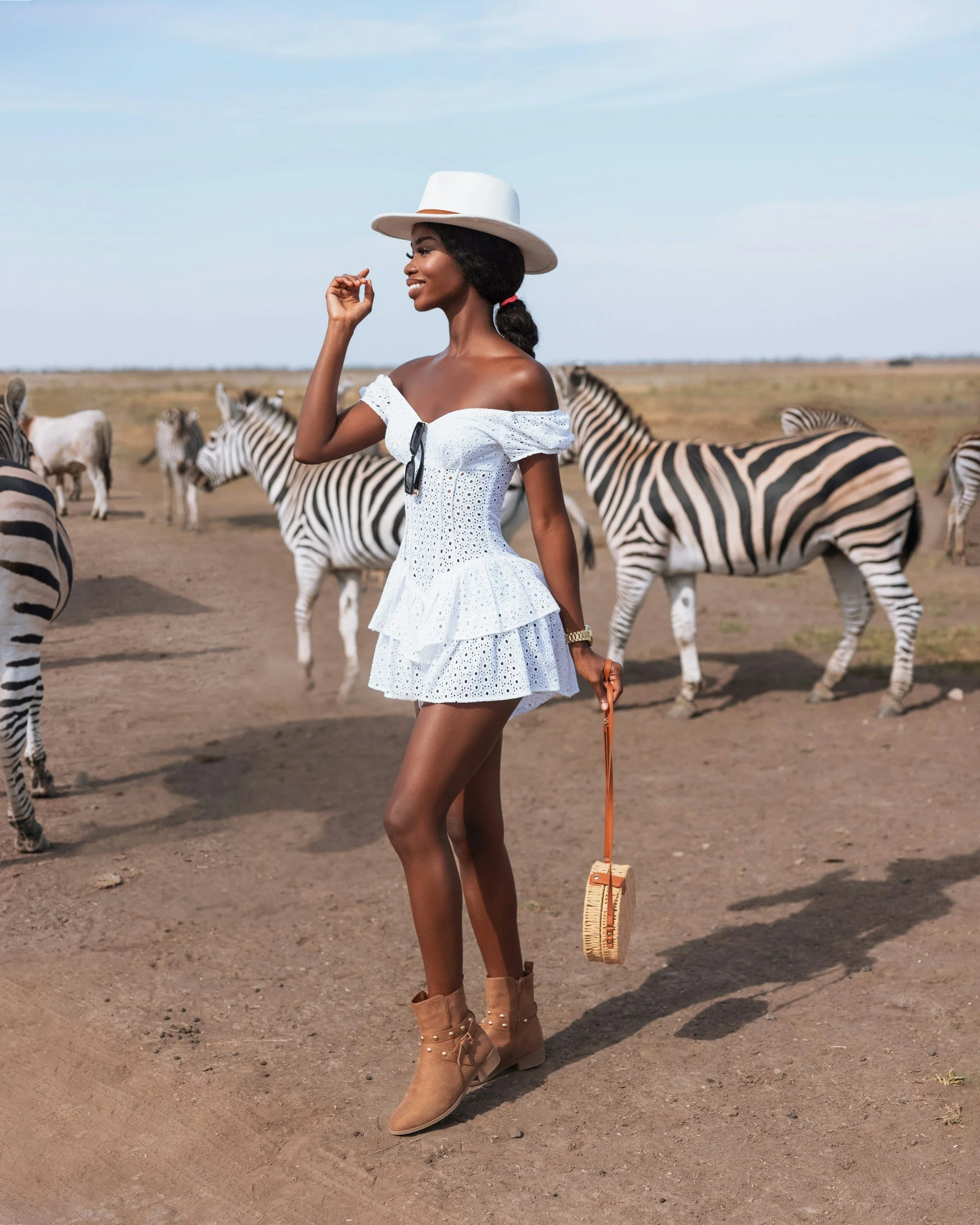
WHAT TO WEAR ON A SAFARI IN TANZANIA

Observing a giraffe wandering in the grass on a game drive will be one of the highlights you will encounter on a safari adventure / Image: @ellenaalice
Once you've booked your animal-spotting adventure and commenced your preparations, the question of what to wear on a safari in Tanzania will likely cross your mind.
Luckily, most of the clothes you'll need to pack are probably already sitting in your closet, so you won't have to start shopping frantically as your departure date approaches. Nevertheless, it's important to separate the essentials from the items that will just take up space in your suitcase.
To make this process a little easier, we've compiled a foolproof list of what to pack for a safari in Tanzania. In addition to our picks for the most practical clothes, you'll also find some must-have accessories and our tried-and-tested packing tips too.

AFRICAN LION SAFARI
Discover An African Safari With A Unique Perspective. Bridging Lion Conservation With Adventure Travel. Join us on our adventure!
WITHIN THIS GUIDE

A traveler wearing a traditional safari outfit in muted colors. Unsure of what to wear on a safari in Tanzania? Read our guide below / Image: @austindistel
The Weather in Tanzania
Before you start looking into what to bring on a safari in Tanzania, you'll need to consider the weather at the time of your visit. This can be somewhat confusing, as Tanzania has three distinguishable climate zones.
Most safaris in Tanzania concentrate on the northern regions (It's within the northern regions where you'll find legendary parks like the Serengeti and the Ngorongoro Crater) which, along with much of the east coast, are characterized by a subtropical climate. Conditions here tend to be warm and humid, and heavy downpours are commonplace during the wet season.
A more untouched Tanzanian safari spot is the country's western lands. Thanks to its cooler mountain climate, the areas near Katavi and Mahale Mountains National Park enjoy more distinct seasons and often experience lower temperatures and more frequent rains.
Central Tanzania is the hottest and driest part of the country. The arid, desert-like conditions make it uninhabitable for most animals and plants, so it's unlikely you'll be embarking on a safari here!
A Breakdown of the Seasons in Tanzania
To get a better idea of what to add to your Tanzania packing list, you'll need to consider the timing of your visit. Tanzania has two main seasons: the dry season from June to October and the wet season from November to May.
June to October - The Dry Season
Typically considered the best time for a safari, June to October are easily the most popular months of the year to visit.
The temperatures throughout the dry season usually hover at around 54℉ to 77℉, depending on the time of day, making for pleasant conditions for game drives and nature walks. You can look forward to plenty of sunshine and limited rainfall, though the evenings can be on the chillier side at times.
November to May - The Wet Season
Tanzania's wet season runs from November to May and is unlike that of many other countries. It consists of periods of both light and heavy rains, with a few drier months in between the two.
From November to January, Tanzania experiences ‘Vuli’, known as the short rains. The humidity starts to pick up, and temperatures rise to 75℉ and 82℉. Though rainfall is frequent, it rarely rains all day.
Between January and mid-March, the rains ease up in the northern and eastern parts of Tanzania. As this brief dry spell comes to a close, it signals the beginning of ‘Masika’, Tanzania's longer rainy season. This stretches until the end of May and temperatures sit at 65°F to 84°F. The rain is heaviest at this time and the humidity can be overbearing, which means that it's the least popular time for safaris.

What to wear on a safari in Tanzania during the varied seasons? consider the timing of your visit to help you pack / Image: @pieterbouwer
Clothing Packing List for Tanzania
Now that you've learnt a little more about the best time of year to safari in Tanzania, it's time to start thinking about the attire you'll need.
Selecting the most appropriate clothes for a safari in Tanzania is much more straightforward than you might think. A general rule is to stick to comfortable, loose-fitting and fast-drying items.
While you may not have given much thought to what colors to wear on safari in Tanzania, this is actually something worth considering. Opting for neutral tones like beige, khaki and brown will help you blend in more easily with your surroundings. Leaving your white clothes at home is advisable, as trying to wash the dirt and dust out can be troublesome. Darker colors like black or navy will attract tsetse flies, whose bites can be painful and even lead to health implications.
Below, you'll find a comprehensive packing list for what to bring to Tanzania for a safari.
What to Wear in Tanzania for Men
T-shirts and tank tops made from breathable material
Long-sleeved shirts to protect from the sun and mosquitos
Shorts
Long pants with detachable ends
Lightweight cargo pants
Warm sweatshirt or fleece
Thermal vest
Waterproof rain jacket
Swimwear
Comfortable underwear
Thick socks
Warm pajamas
Cap or wide-brimmed hat
Sunglasses
Belt bag
What to Wear in Tanzania for Women
The recommended clothing for women in Tanzania is much the same as that for men, but with a few additional items.
Comfortable supportive sports bras and standard bras
Casual lightweight dress (optional)

A safari guide observing a giraffe eating from a tree on a game drive in an open top jeep / Image: @marnovais
What Shoes to Pack for a Safari in Tanzania
Much like the suggested clothing for a safari in Tanzania, practical options are best for shoes too.
Selecting a pair of durable, walkable shoes is imperative. Depending on the itinerary for your safari, you might find that you spend quite a lot of time on your feet. This doesn't mean you'll need to dust off your hiking boots, though they're a great option if that's what you're most comfortable wearing, but it's best to wear sneakers or sports sandals.
Just one pair of supportive shoes is all you need. However, if you have sufficient space in your suitcase, bringing along a pair of flip-flops to wear around the lodge in the evenings is always a good idea.
Choosing the Right Colors for Your Safari
Colors matter more than you think on a safari. While it might seem tempting to buy lots of clothes in bright shades like reds and oranges, you should think twice before doing so. We advise against them because they make you stand out to wildlife and may startle some animals.
Blue and black are also big no-nos, as tsetse flies are attracted to these colors, especially in places like Tarangire and Lake Manyara National Parks, where they're most prominent. You can certainly wear whites, but since you’ll be outdoors in the bush, there’s a high chance your clothes will get dirty from the dust you'll experience throughout your game drives.
So, what colors are the best to wear on a safari in Tanzania? Think natural and go for something that blends in. Beige, khaki, and light greys go well as they don’t stand out as much.
Selecting Suitable Clothing Materials
Colors matter, but choosing the right clothing materials is just as important, since they help protect you from insects and all types of weather.
Being out in the wild means you’re going to be exposed to lots of insects, including mosquitoes, which pose a significant risk since diseases such as malaria and dengue are prevalent in Tanzania. For this reason, try to ensure your outfits are loose, so they won’t bite through your clothing. Additionally, consider buying clothes made with velvet, denim, tight-knit wool, or nylon ripstop, as they offer good protection.
You’ll also be exposed to plenty of sunlight and strong UV rays during your safari. Make sure to stick to tightly woven fabrics such as canvas, lightweight wool, nylon, or polyester, as these materials are known to provide effective defence against the sun.
Packing for Rain
No matter what time of year you travel to Tanzania, you should always pack with rain in mind. Anyone coming during the rainy season will need to be especially prepared, as it’s going to be very wet. But even if you visit during the dry season, you might still get the odd downpour or two, although it’s less likely.
A waterproof jacket should be a priority. It doesn’t have to be a heavy coat. Stick to something light that folds easily and fits into a day bag. You may also want to bring an umbrella too.
With the rain, you also have to watch out for your shoes, as they can get wet easily, which can make you sick if they’re really damp. To be on the safe side, have a spare pair of socks with you at all times, just in case your shoes get saturated in a downpour.
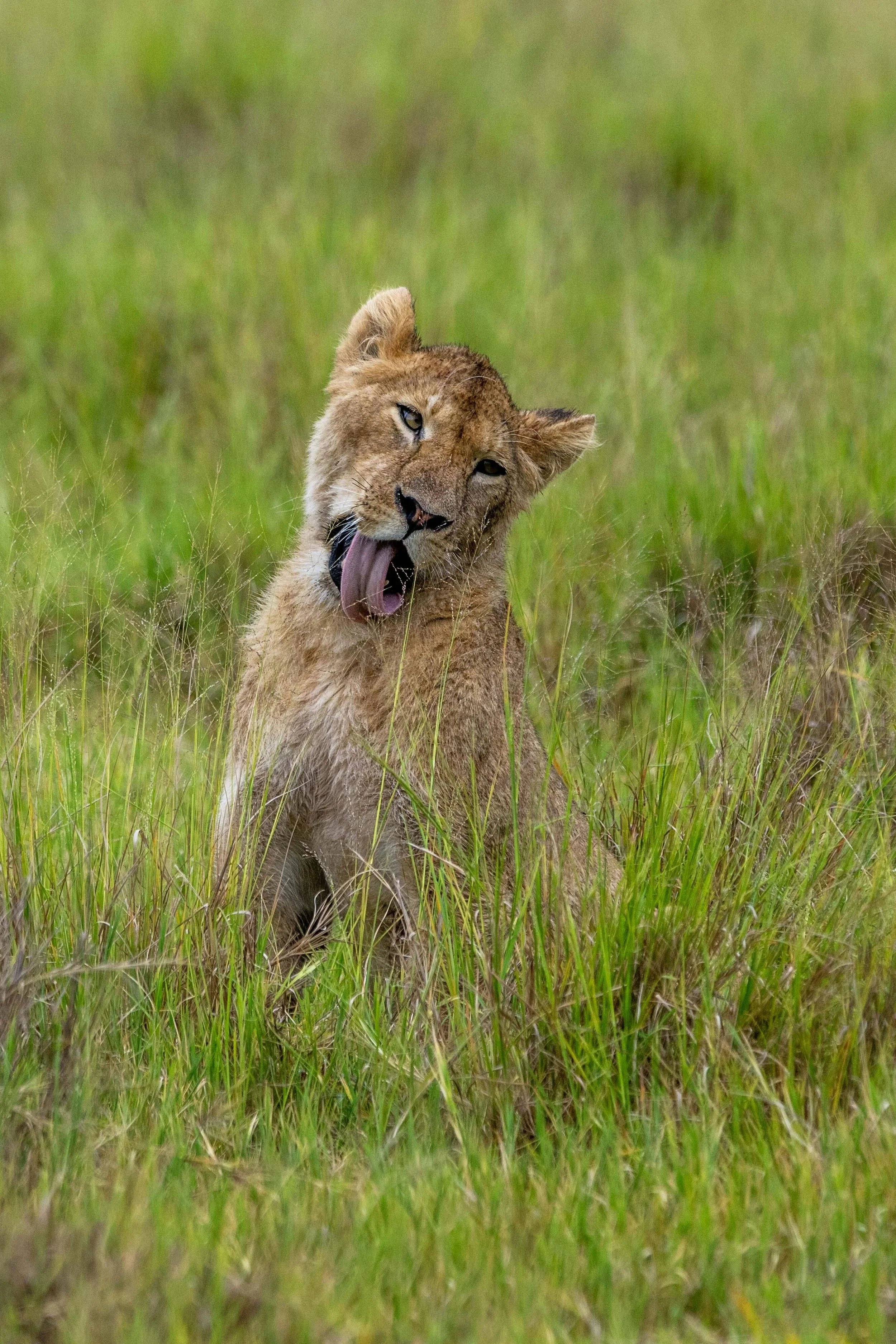
A wet young lion sits in the green grass in Ngorongoro Crater / Image: felix-rottmann
Bringing Electronics on a Safari - What You Should Know
One of the most common concerns travelers have before going on a safari is how to manage their electronic devices. Safaris typically take place in remote, rural areas where access to electricity and reliable connectivity may be limited. Understanding these constraints in advance will allow you to prepare appropriately.
Travel Adapters
First and foremost, it’s important to determine which travel adapters you need to bring. In Tanzania, power outlets are typically Type G and Type D, operating on a 230V supply. To avoid any inconvenience, we strongly recommend obtaining the appropriate adapters prior to arrival.
Wifi
Wi-Fi connectivity within Tanzania’s national parks may be limited. That said, tented camps, lodges, and some safari vehicles are equipped with power facilities, ensuring you are able to charge devices such as phones and cameras during your stay. However, before departing for game drives, we strongly recommend fully charging all electronic devices, including cameras and power banks, as a precaution.
Drone Usage and Photography
Many photographers travel to Tanzania to capture its extraordinary wildlife in their natural habitat. The country is generally very welcoming to photography. However, professional photographers or those intending to film may be required to obtain a permit and pay additional fees for their equipment. Visitors taking personal photographs with a standard DSLR camera or mobile phone for private use typically do not require special permits and may use their devices freely.
Drone usage within Tanzania’s national parks is strictly regulated. Operating a drone without the appropriate filming permit and payment of associated fees is not permitted. Even with approval, there are extensive regulations governing where and how drones may be used. For this reason, we generally advise against bringing a drone unless prior authorization has been secured.
Additional Accessories to Bring
Finding the right clothing and footwear is just one aspect of packing for a safari in Tanzania, as there are a whole host of travel accessories that you'll need to think about.
This includes everything from helpful gadgets to your favorite toiletries, so we've broken this section down into three separate categories.
Essentials:
Passport
Cash and bank cards
Travel documentation (plane tickets, visa information if required)
A copy of your travel insurance policy
A printed outline of your safari itinerary
Vaccinations records
Medication (with prescriptions where necessary)
First aid kit (painkillers, band-aids, etc.)
Feminine hygiene products (if necessary)
Toiletries:
Sunscreen with a high SPF
Lip balm with SPF
Aftersun cream
Insect repellent (suitable for Tanzania)
Antibacterial wipes and creams
Hand sanitizer
Toothbrush
Toothpaste
Dental floss
Hairbrush
Razors, tweezers, etc.
Contact lens solution (if required)
Shampoo and conditioner (most lodges supply these for guests, so you'll only need to pack these if you use a specific type or brand)
Personal toiletries (deodorant, perfume, creams, ointments, etc.)
Travel accessories:
Power adapter (plugs in Tanzania are typically the three-pin variety, the same as in the United Kingdom)
Phone charger and cables
Power bank
Camera, charging equipment, and memory cards
Flashlight
Binoculars
Document wallet
Ear plugs
How to Pack for Zanzibar If You’re Traveling There After a Safari
It’s very common to visit Zanzibar after a safari. Once you’ve come this far, it’s worth spending a few days relaxing in paradise before heading home.
Packing for Zanzibar is quite different from safari. As a tropical island, the climate is warm and humid year-round. As well as that, almost the entire population is Muslim, which means you’ll have to dress conservatively outside of the beaches and hotels.
For women, we recommend packing long shirts and full-length trousers to keep arms and legs covered when in towns or villages. Long, lightweight dresses are also ideal in the heat. A sarong is particularly useful, as it can be worn when visiting religious sites and also doubles as a beach towel, saving space in your bag. Bikinis are perfectly acceptable on the beach and within resort areas.
For men, it’s advisable to bring a few pairs of long trousers for when you’re away from the beach. Very short shorts are not generally viewed favorably in urban areas. Knee-length or three-quarter shorts are more appropriate.
When visiting mosques or exploring Stone Town, you should dress conservatively as a sign of respect.
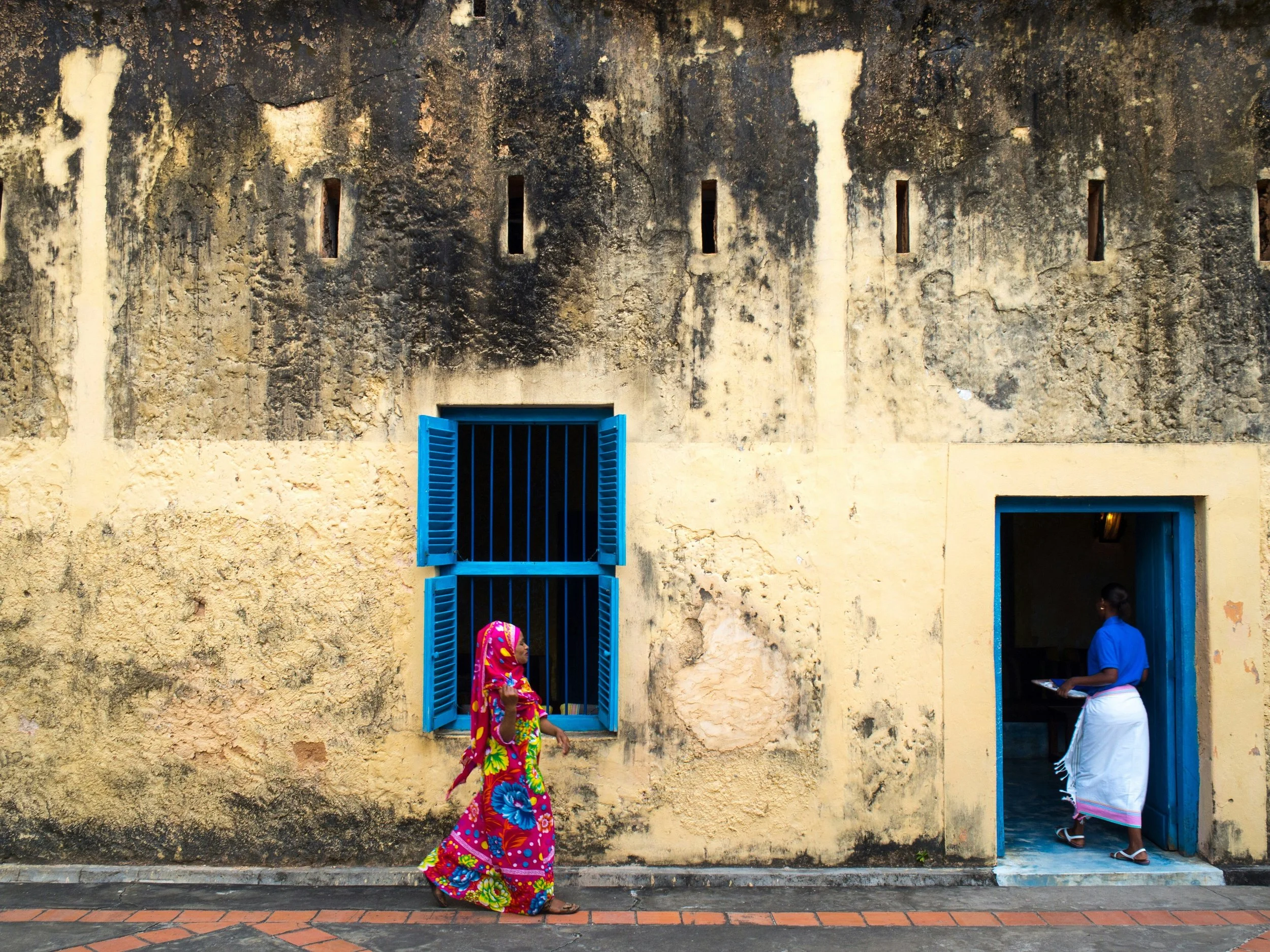
A vibrantly dressed woman walking along the streets of Changu Island in Zanzibar / Image: giacomo-berardi
Packing Tips
Now that you know what to wear on a safari in Tanzania and which accessories to make room for, you can start to look forward to your incredible adventure without worrying about what to pack.
Before you set off on your excursion through the wild and wonderful safari parks, here are a few extra tips about packing for Tanzania.
Bringing your newest, costliest and most prized clothing is not advised, so it's better to go for alternatives that you won't be worried about dirtying.
Though it might seem like a good option for a safari, wearing camouflage clothing anywhere in Tanzania is illegal, excluding military personnel. If you're spotted in camouflage, you'll likely face a fine and have this clothing confiscated.
Many lodges and campsites offer laundry services. With this in mind, you can pack light and re-wear your clothing rather than trying to squeeze in enough garments for the duration of your trip.
Natural fabrics like cotton and linen don't dry quickly, so sticking to synthetic materials like polyester and nylon is more practical.
Because temperatures can dip considerably at night, including clothes that layer easily is essential.
Even if you're visiting during the dry season when rainfall is minimal, don't forget to pack a rain jacket. Just as there's a chance of rain-free days during the wet season, downpours are still possible during the drier months.
Your Fail-Safe Guide for What to Wear on a Safari in Tanzania!
With any luck, by now, you'll feel well-informed and at ease about what to take to Tanzania.
Safaris are not usually the most glamorous getaways and there's no strict dress code for Tanzania safaris, so the key is to keep things simple and comfortable. In most cases, you won't need to purchase any new clothes ahead of your trip.
In short, don’t worry too much about what to wear on a safari in Tanzania - this will allow you to focus your time on the magnificent expedition you're about to undertake!

Image: @huchenme
Let Us Design Your Dream African Safari
YOU DREAM - WE CREATE
Our tailored African safaris are bespoke and customizable and we design to cater to your every need.
Our Design team is dedicated to crafting personalized experiences that perfectly align with your preferences, requirements, and aspirations. From the sweeping plains of the Serengeti to the untamed beauty of the Okavango Delta, we leave no destination unexplored.
Whether you're venturing alone, with a partner, as a group, or with your family - Reach out to us today, and let's embark on the journey of a lifetime!